Feb 022026
 

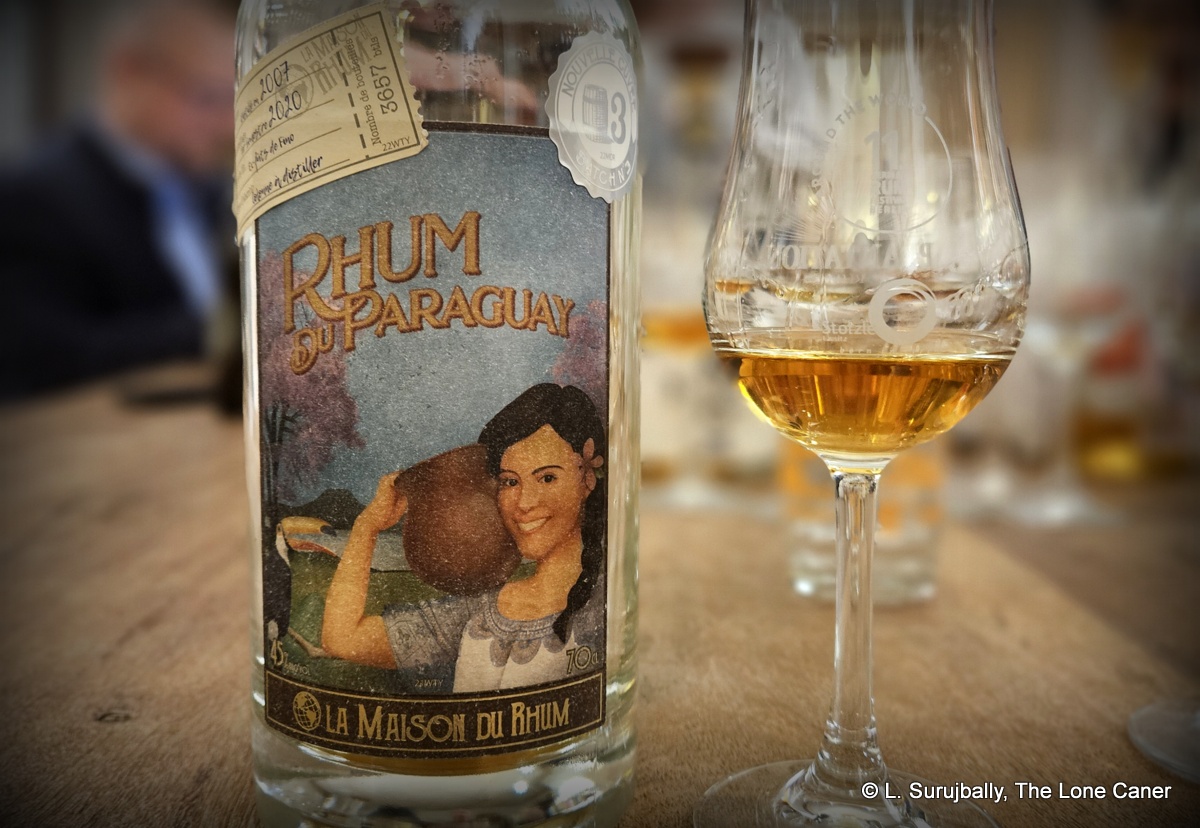
Among South American rums, some countries just don’t make waves outside their own borders. How many of us have heard of Gran Chaco from Bolivia, or Isla Ñ and Tickerman from Argentina, for example? In Paraguay, the source of today’s review, we’ve been fortunate once before to try the “Herocia” from the Fortin brand, and here we have another one from the distillery of origin (see below for details), brought to us courtesy of La Maison du Rhum in France – this is in turn a 2017-founded brand of the French spirits distributor Dugas, and may be the only way we’re ever going to get a rum from such a relatively obscure (in rum terms) product.

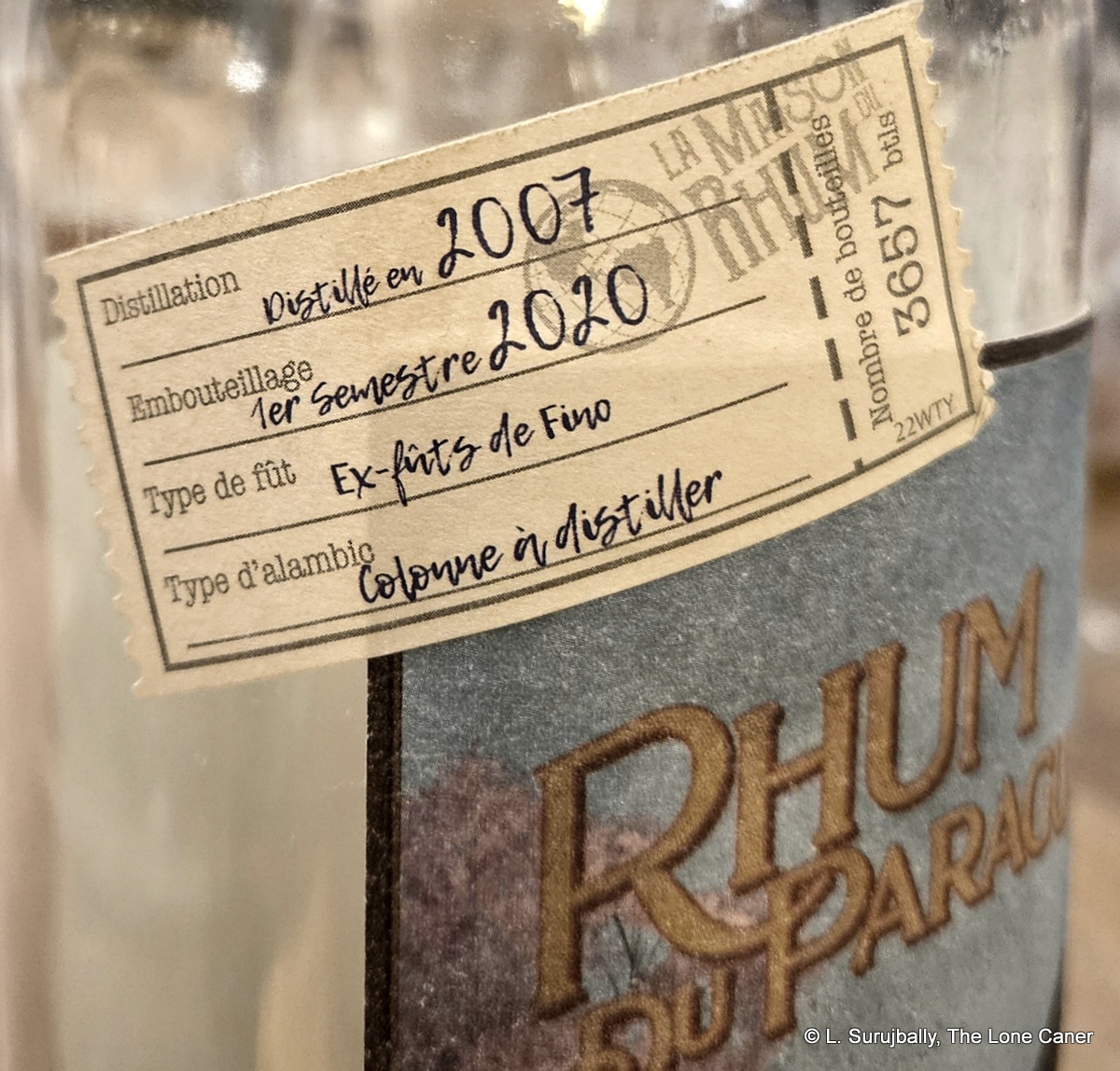
The production notes are as follows, and have not appreciably changed since the original Heroica review. The rum is made from rendered sugar cane juice (“honey”), fermented for 72 hours using wild yeast, column distilled, then aged in a American ex-bourbon barrels, then given a few months’ additional finishing in Fino sherry casks, so it seems reasonable to suppose it’s double aged: in Paraguay and then in Europe. Given the outturn of nearly 4,000 bottles, I believe that LMdR got the final blended product and that part had some European ageing, including the finish, for a total of 13 years (but this is not for sure, since Fortin also does finishing). Released at a middling 45% ABV. Oh, and it should be noted that this is Batch #3 – as of early 2026 I think they are up to #6, all bottled in the forties ABV range.
This is where an indie bottling (which this is) gets more respect for disclosure that Fortin did – by a whisker. That is, unfortunately, not enough to elevate it over and above its sibling, even with the more serious age and the finish. Consider the nose. This is dusty and rather dry (the sherry influence helps here). Initial dry notes of cardboard, straw and damp tobacco, mix it up with vanilla, cinnamon, honey. A trace of glue and salted caramel, and if one strains, perhaps a touch of citrus and mango. 

Taste? Meh. Not much more here – the dryness persists, there’s some grapes, and glue, the mangoes (or is that pineapple?) hints are back, and beyond that it’s all the standard hits of a barrel aged rum – caramel, toffee, some coffee grounds, wet ashes, honey, cinnamon, vanilla and mild cigar smoke, all tied up with an unenthusiastic and quick finish that is as straightforward as all the preceding tastes, and adds nothing new to the party.

Honestly, even at 45%, it’s nothing special, and as I have noted before, any rum based on sugar cane juice – actual or rendered down – loses its connection to the terroire with prolonged barrel ageing, which is exactly what happens here. So one is left to wonder what the selling point of a rum so ordinary really is. The unusual country of origin? The bottler?

The original Heroica was bottled at 40% and that more or less failed – perhaps I was generous with that 79 point score back in 2020. Here, even at five proof points higher, it still doesn’t do much and scores a point less. For those who enjoy the easier, lighter Latin style of rum making, sure, why not? For those who like their uncompromising cask strength growlers, I’d suggest that even with La Maison’s imprimatur on the label, the ultimate result is a rum that is slickly made, nicely labelled, but buggy in execution, reminding me of nothing more than a premature software update which does nothing in particular and relies on the brand to sell.

(#1137)(78/100) ⭐⭐⭐


Other notes


Background

Paraguay — one of two landlocked countries in South America is something of a newcomer on the international rum scene, and most of the rums they have made that are distributed abroad have only come on the scene in the last two decades — previously, just about the entire production was local, or regional. So far they have stuck with the traditional rons and not gone too far off the reservation. All that is now changing, as they begin to seek a space on the export shelf.

Fortin, the overall brand of the distillery called Castilla, dates from the post-1989 era and takes advantage of a change in legislation regarding alcohol at that time. From 1941 to 1989 the production and sale of alcohol (and spirits) was a state monopoly, run by the Paraguayan Alcohol Corporation in which the Government and producers both had stakes.  Officially this was to rationalize standards, assign quotas, regulate competition and prevent tax evasion, but in reality it was to ensure the commercial elites went into business with the government to share in / siphon off the revenues.  After Alfredo Stroessner (the last of a series of military jefes ruling since the 1930s) was toppled in 1989 the laws were relaxed and private industry began to revive. 

Castilla Distillery was formed around 1993 as a sugar producer by Gustavo Díaz de Vivar, and although it started in Capiatá area to the immediate SE of the capital, Asunción, the company soon moved further east to the town of Piribebuy; after the sugar business took off, he and his son Javier Díaz de Vivar (the current president of the company) diversified into rum production with a multi-column still bolted onto the already existing sugar factory they had built..

The distillery is located on a small estate of about 1,500 hectares (~3700 acres) where the sugarcane is grown. The cane is cultivated according to organic farming principles and is apparently manually harvested. They age in all kinds of barrels – American oak (ex-bourbon), cognac, sherry, and also Marcuya “fruit of passion” wood from Paraguay.  Once that’s done, the resultant rons are blended to form the final product and released under the Fortin label, or, perhaps, sold on to brokers and intermediaries in Europe for the independent bottling scene.
Jan 242023
 

Taiwan is not known for rums, but then, it was not known for whisky either, and look what Kavalan has managed to accomplish.  So, sooner or later, I had to come here, where an expatriate Frenchman named Oliver Caen and his Taiwanese wife Linya Chiou, have created one of the most interesting new distilling companies out there: interesting for their location, interesting for their labelling, interesting for their rums, and interesting because so few people have tried any — yet everyone knows of them, and everyone is curious to check them out. Word of mouth like that is priceless.

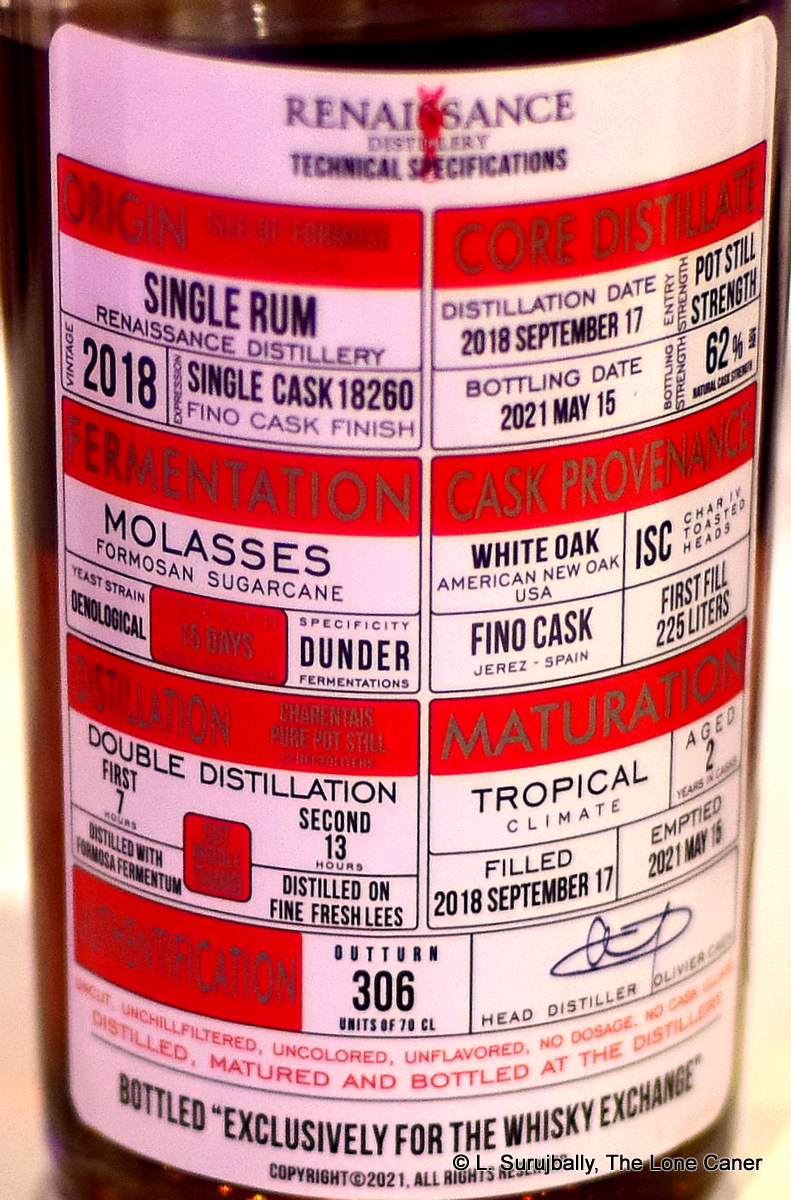
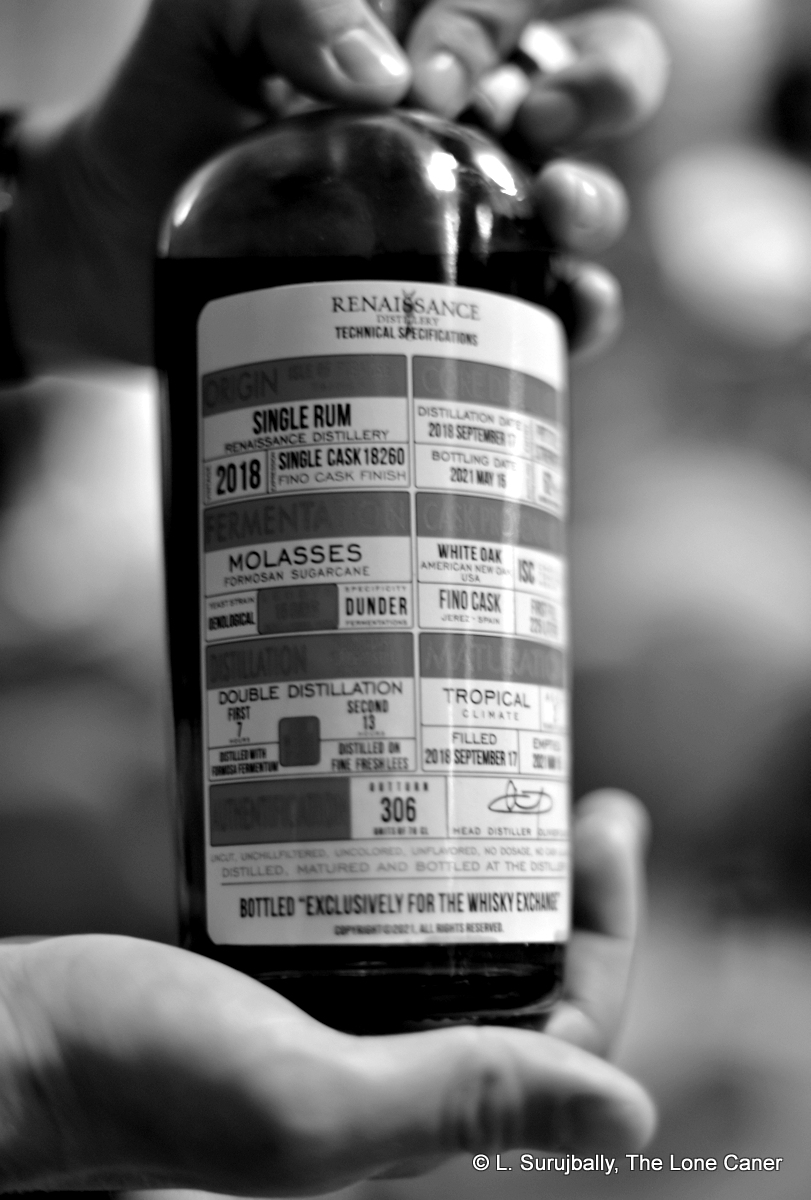
I’ll provide some company background below this review; for the moment, it’s enough that we know the 2017-established company has a 500L steel pot still and a more recently added 1200L copper Charentais still.  Sources for the wash are both molasses and juice derived from their own small estate cane; fermentation varies and can take 15-21 days if from juice, and at least 10 days if from molasses; double distillation is practised and ageing is done in a variety of barrels sourced from France, Spain, Russia, Japan and the US.  The sheer variety of the production methods they indulge in probably explains why the company has made it a hallmark of its labelling ethos to provide a level of information on the rum in each bottle that would make Luca Gargano weep with envy and frustration and for which us geeks can only be grateful.

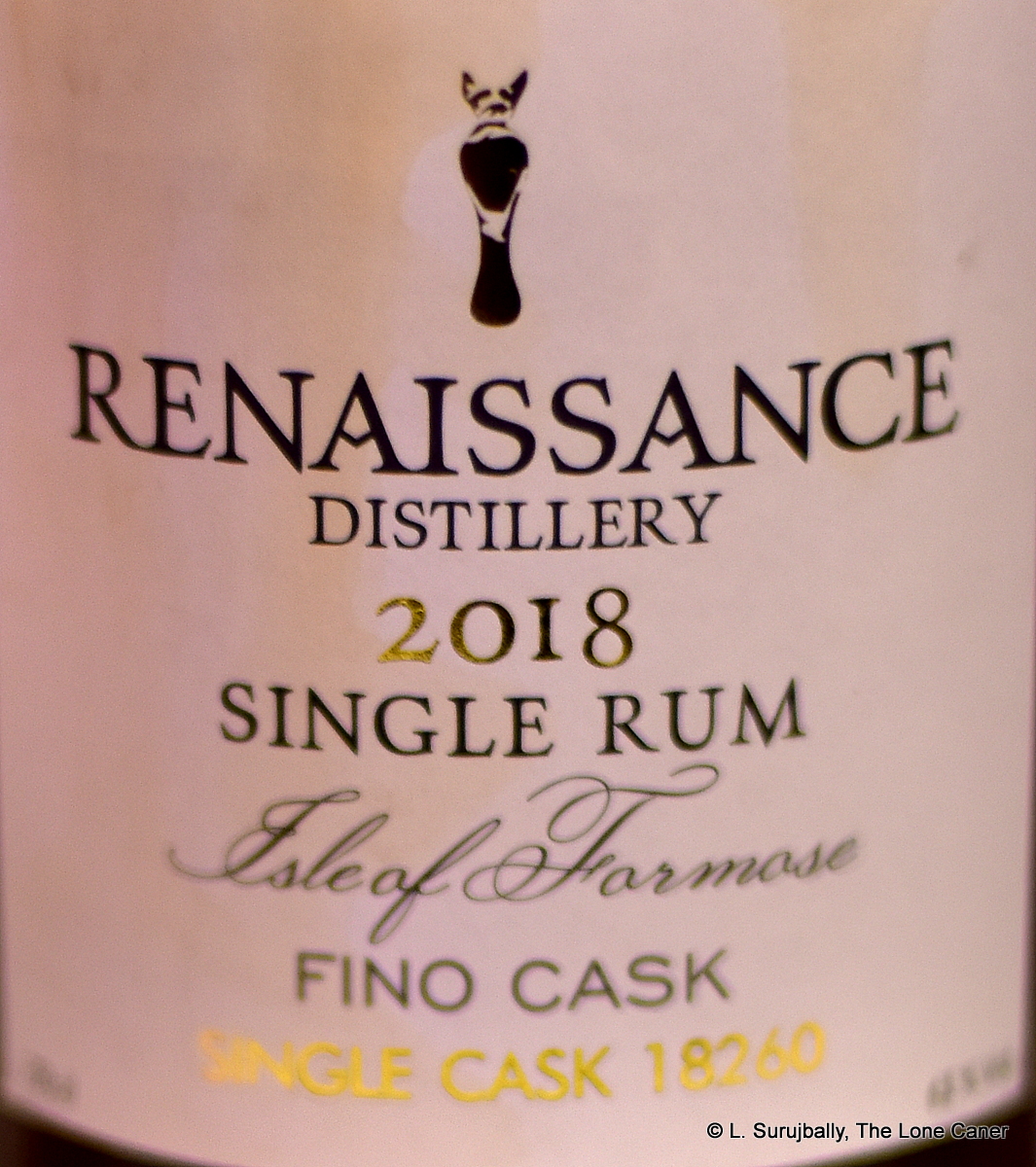
Not many of Renaissance’s rums are as yet easily or commonly available and their production remains relatively small. The rum we are discussing today is a 2018 double-distilled 3 year old rum, and in relating the tech specs you realise that this is where that bible of a label, that ‘wall of text” comes into its own.  The rum is molasses based, 15 days fermentation with some dunder, aged in a new 225L American oak cask and then finished in Fino sherry cask (Fino is a dry sherry), 306 bottle outturn and 62% ABV…and just from those details you can tell how much the label provides (I have left out quite a bit, to be honest because sometimes there is such a thing as overkill, though I’m glad to get all this too).

Anyway, the rum’s production background suggests a rich experience, and indeed, the profile is really quite interesting. The nose for example, opens right into licorice, blackcurrants, some medicinals, flortals, light delicate perfumes, vanilla and some crisp citrus notes. Underneath those aromas is something a bit softer and muskier: flambeed bananas, salt butter, the vegetable aromas of a hot and spicy miso soup leavened with ripe mangoes and lemon peel. It’s solid at 62%, though thankfully it stops short of serious aggro.

The palate was just similar enough to rums with which we are more familiar to make the occasional diversions interesting and singular, rather than off-putting. There’s som blancmange, salt caramel, bananas, licorice and almonds, all at once.  This is followed, as the rum opens up some, with sharper and quite clear citrus and floral notes, some burnt bell peppers, chocolate oranges, unsweetened chocolate coffee grounds and – peculiarly – even quinine comes to mind (and I should know). There is some faint sweet spiciness at the tail end which bleeds over into the long finish – this is mostly cloves, ginger, licorice – but at the end it’s fruity with raspberries and some syrup, honey and brine.

Well, labelling is one thing and presentation goes hand in had with it, so it talks well, but based on what I’ve described, does it walk? Opinions are mixed.  All in all, there’s a fair bit of hop-skip-and-jump going on here and perhaps its inevitable that with a rum being this young and with all those processes in its DNA, it would be a little uneven. The Fat Rum Pirate, in one of the best reviews so far, suggested this very aspect, wondered what it was like without the Fino finish, and rated it three stars (out of five). Will and John of the Rumcast named this one of their rums of 2022 (in the “most surprising” category at 1:11:28) and Will remarked that “if a high ester Jamaican rum and a Fijian rum walked into a bar and had too much sherry, it would be this rum” but stayed clear of making either a full throated endorsement or a dismissal. The originality was clearly key for Will, as it was so unusual. Serge over at WhiskyFun commented on it being “big,” that he didn’t get the finish, couldn’t say it was brilliant…but surely worth checking out. 

That’s really what I come down to as well.  It’s unusual, in a good way. While some more ageing would likely make it better, it may be too early to ask for that: as with many small up and coming distilleries who need to make cash flow, young rums is what we’re getting (the Australians were also like this, as are some of the new American craft distilleries).  The rum does channel a bit of Jamaican, and combines it with something softer and easier – a Barbadian or Panama rum, say (Serge said Lost Spirits, which I thought was a stretch) – and what it reminds me of is, oddly enough, Montanya’s Exclusiva, which scored the same. The Renaissance gains points for somewhat different reasons, but it remains in the mind just as Montanya does — and all I can say is that I just wish it was cheaper.

(#968)(86/100) ⭐⭐⭐⭐


Other Notes

  • Casks are important in the identification of Renaissance’s rums.  This one is Fino #18260
  • For now it simply costs too much for serious appreciation, but I do recommend it.
  • This is an exclusive bottling for The Whisky Exchange
  • A brief backgrounder. The husband and wife team have been spirits importers to Taiwan since 2006; by 2013 they felt that the combination of rum’s rise on the international scene, the lack of a “serious” Taiwanese branded rum and their feeling that there could and should be one, made them investigate starting a distillery of their own (at the time Taiwan produced brands called Koxinga Gold and Wonderland, but these were not well regarded and almost unknown outside the island). Experimenting with molasses, juice or cane sugar on a 500L stainless steel pot still for the next three years (without a licence and while holding down day jobs), they decided that the rums they could make were viable, and went on to formally establish Renaissance in 2017 as a single estate distillery in southern Taiwan, using organic methods and mono-varietal cane. 
  • Taiwan had a solid sugar cane industry (cane has been recorded there at least since the 14th century, and the the Dutch introduced industrial sugar production in the 1600s when the island was known as Dutch Formosa)
  • Although agriculture uses almost a quarter of the land in Taiwan (and a full half of the entire sector is plant-crop based), moves to an industrialised hi-tech manufacturing economy have gradually reduced its share to less than 2% of GDP (from 35% in 1952), and it is considered a support of the economy, not a primary driver; land use has been shrinking as well, even though the Government wants this to change in order to promote better food security. Sugar cane used to be an export crop but has been reduced of late, and is not a major focus in Taiwan any longer; therefore it is not surprising that a vibrant sugar or spirits industry based on cane has never really developed (Government monopolies, and restrictions on spirits production, were other reasons); wine on the other hand has become more popular, and the example of Kavalan whiskey is a model that no doubt influenced Mr. Caen as well.