Apr 102026
 

Introduction

If you recall, a few weeks ago Cap’n Colp hove into view, all flags waving and bunting streaming, and rolled a barrel into my house. No, really. Uninvited, unexpected, unannounced (I hesitate to say “unwanted”) he took out his trusty thief, jammed it into the barrel, and poured me a shot of liquid gelignite so extraordinary for its extreme youth, that here, a fortnight later, I’m still  uncrossing my eyes. I mean, that sh*t was really quite amazing, the more so since it’s such a rare thing, here in the wilds of suburbia where the LCBO holds sway and we are starved for anything remotely resembling serious quality from something so young. 

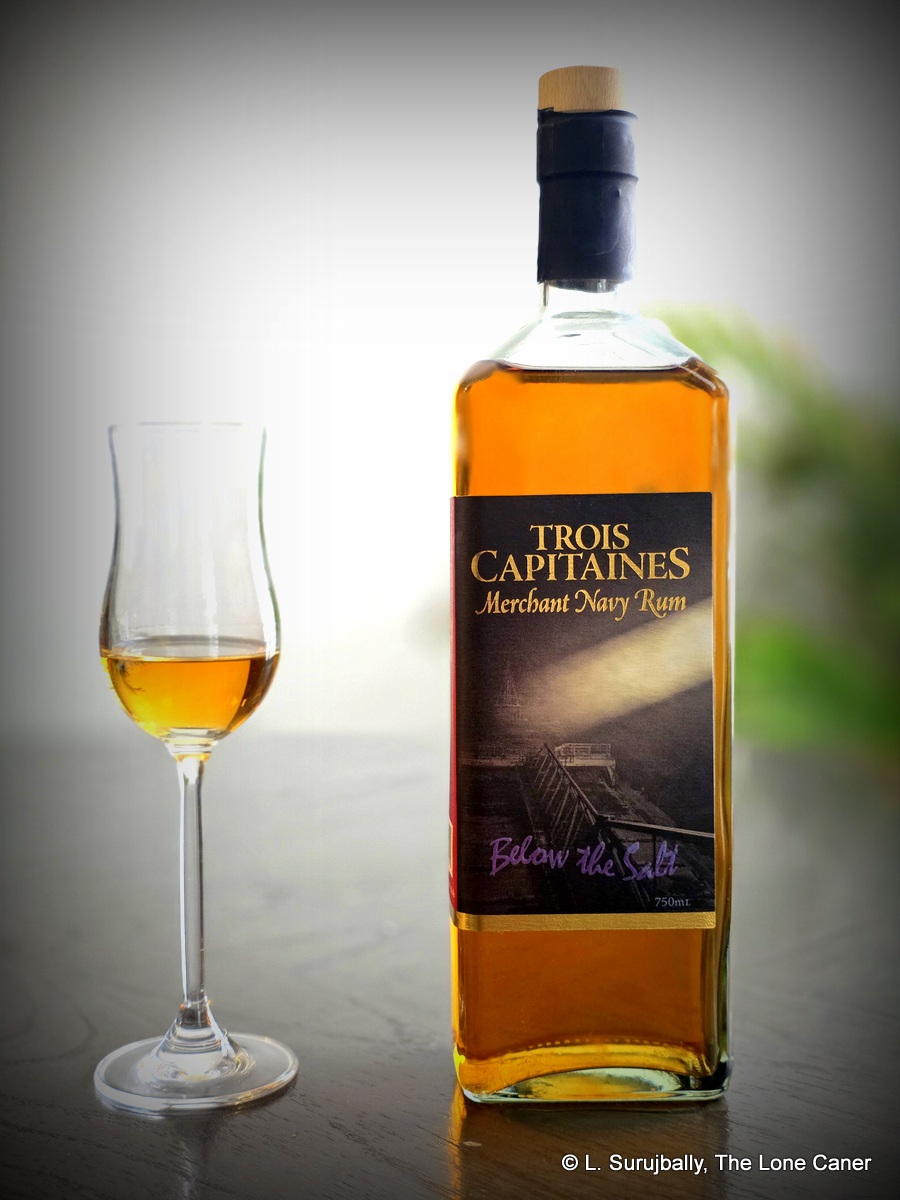
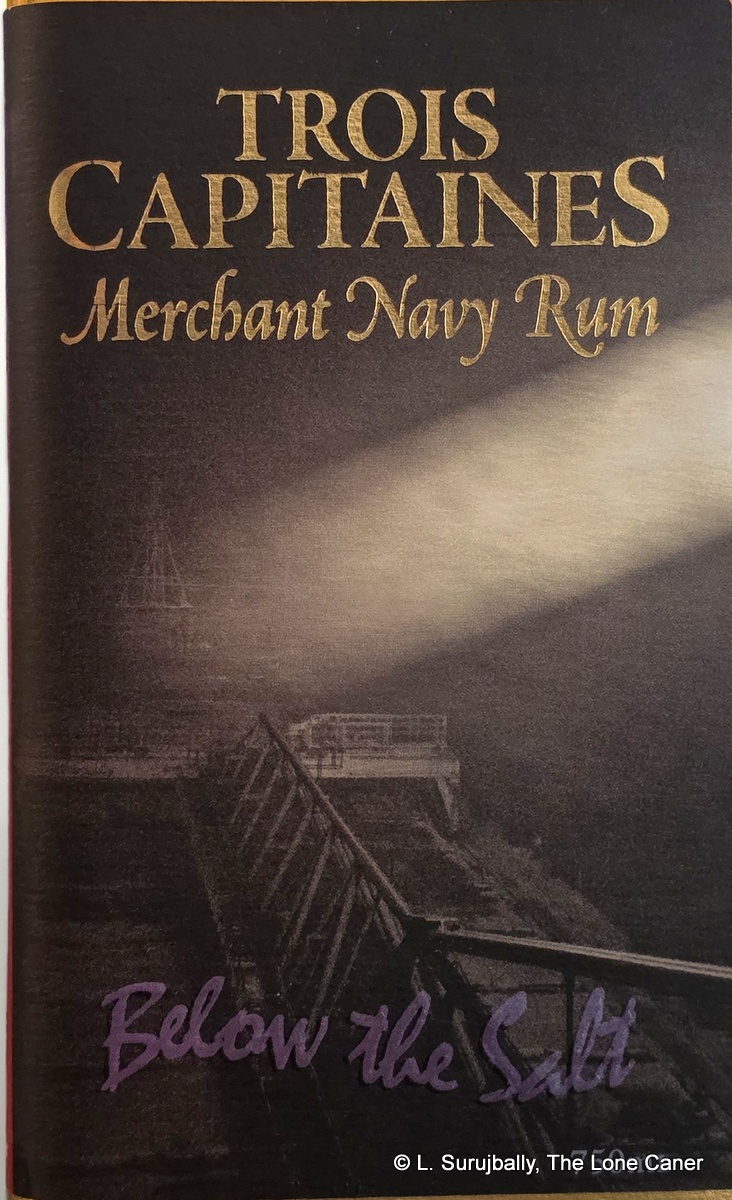
Since then, the contents of that barrel and its siblings have now been bottled in a specially high-tempered glass enclosure that smokes and gurgles and growls, and has been adorned with a title the length of a Turner painting – Below the Salt’s “Trois Capitaines” Merchant Navy Rum “The King’s Cut.” 

Below the tasting notes I’ll provide a bit more background at my usual inordinate length, but for the moment let’s just summarize by saying this is a 57% pot still rum aged for less than a month in 40L barrels in a solera system, and is unexpectedly, even remarkably, good – the small barrels really make for some intense tastes, and the strength certainly does no harm – and even if there are some caveats, which I’ll get into as well, the entirety of the experience is quietly outstanding.

Tasting Notes

So let’s begin. The nose presents with a panoply of aromas that a rum many years older would have difficulty emulating: initial notes of salt, honey, vanilla, caramel, salt and brown sugar, which seems kind of “standard” before kicking into geat. And then we notice some rancio, hogo, pineapple, cinnamon, nougat, almonds, mangoes.  Plus – and yeah, the party isn’t over yet — glue, brine and olives, rotting oranges, flambeed bananas. Bloody hell, there’s a lot to savour here.

Tasting it is again, something quite amazing: to begin with, if you were to tell me this was 10% less than rated, I’d believe you – the balance is that good, the whole feel of it is so firm and well done, you could easily believe this was a mid- to high-forties proof rum. Firm and spicy for sure – at that strength it’s expected — with delicious notes of honey, caramel ice cream, brine, olives, rotting oranges… and then it picks up a head of steam with pickles, marzipan, cocoa cola and oak tannins.  The whole thing leads to a finish startling in its length and clarity – mostly the same hints of nougat, brown sugar, toffee, flambeed bananas and slightly sour fruits, even a pimento or two, and a hard shake of the spice shakers. 
Thoughts

There are both and bad things to be seen here, which a lengthier tasting exercise made me more aware of, more so than when I just tasted something straight out of the barrel. What I really liked about this rum is that it was unashamedly made how it’s made, takes a side for its tasting profile, and isn’t coy about it. Too many rums are made to be like puppies – they’re sweet, everyone loves them, nobody is offended – here’s one that doesn’t give a damn whether you like it or not, and just shrugs and goes its own way. For any rum maker to have that attitude is exemplary – to find it in the maritimes of Canada where rums are thick on the ground but too often thin on the sh*t that matters, is nothing shy of extraordinary.

That said, much as I liked it, you can’t get away from the extreme youth, and much as the small barrels intensify tastes in a short time frame, it’s occasionally rough, and lacks the more rounded profile of something aged longer and more patiently, where the alcohol-water-wood interaction is quieter. However, I simply argue that this is not a disqualifier, but an aspect that reflects this rum’s individuality.I’ve noticed a similar edge where a rum is diluted too quickly down to 40% – the shock of fast addition of water is very different from a slower process that is done over a period of weeks or months, and here, that’s evidenced in a ruder, more jagged result.  This does enhance its character – I would not score it the way I did otherwise — but it does lack a certain elegance some might be looking for, and the casual drinker should be aware of that. You’ll have to accept that and move with it, I think. Me, I liked it for precisely those reasons.
Background

The long title probably requires some explanation. First of all, Below the Salt is a small distillery founded by a Canadian tug boat captain named Gregg Colp a few years ago, located in Nova Scotia. It is an environmentally friendly carbon-zero operation with a pot still and a small barrel ageing operation. The distillery is a micro, and has much more capacity than sales at this point, largely due to the difficulty of breaking into the various eastern provincial monopolies which run and buy for and stock all the stores there. That said, they produce a variety of products: vodka, grappa, rum, brandy, gin and even an RTD mix called the Boilermaker.

This rum is made from a version of panela, or jaggery – rendered down sugar cane juice deriving from unrefined Guatemalan and Demerara cane juice crystals (specifically not refined sugar); fermented for a few days and then run through the pot still. When the cuts are made from the spirit run, the lees are normally thrown back into the wash to be recycled, but for the “King’s Cut” here, the best and most aromatic parts of the hearts and tails are retained and put to age by themselves. Sharp observers will recognize this as essentially the same as what some distilleries – notably Privateer out of the USA – refers to as the Queen’s Cut, and is always deemed a cut above the ordinary, so to speak..

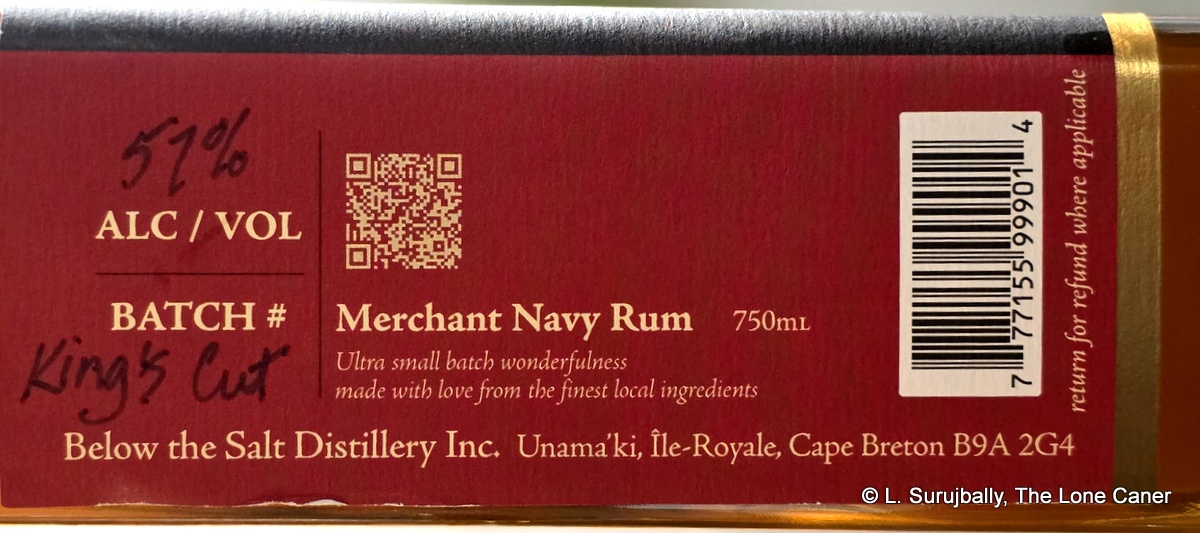
The ageing here is done differently as well: this rum is aged in a dozen or so 40L oak barrels, for less than a month, in a quick solera style system. This results in a 500 bottle outturn, released at Navy Strength of 57%, which explains the latter part of the rum’s title. One may reasonably assume that the Merchant Marine, when they took rum aboard, adhered to similar traditions and used the same strength as the British Royal Navy

As for the “Trois Capitaines”, that’s is a title that hearkens to the founder’s antecedents. The first is a distant ancestor of Gregg Colp’s, Kapitan (Captain) Jacob Kölb – he was an 18th century Swiss mercenary who settled in the Maritimes, hooked up with a Mi’kmaw woman and, in what appears to be a consistent trait of the family, brewed his own illicit hooch to take on board whatever ship he was sailing that day. The second Captain was Captain de la Ronde (grandfather? great-grandfather?), who did rum running like William McCoy from the US during Prohibition. And of course, in a modest and self-effacing nod to himself, the third Captain is the distillery’s founder himself — and who, having met him, I can say is as colourful a character as one can hope to meet these days.

(#1144)(87/100) ⭐⭐⭐⭐


Other notes

  • Video recap link of the review
  • Video recap of the distillery background
  • This bottle is a free one, provided in what is probably a deplorable excess of enthusiasm by Captain Colp, who really hoped I’d try it after my positive (if unofficial) eval of the barrel it came from. I don’t think it influenced my assessment, but it’s best you know the source.
  • Somebody will inevitably ask, so the Turner painting I reference in paragraph 2 is “The Slave Ship, Slavers Throwing Overboard the Dead and Dying, Typhoon Coming On” (1840)”
Jun 272025
 

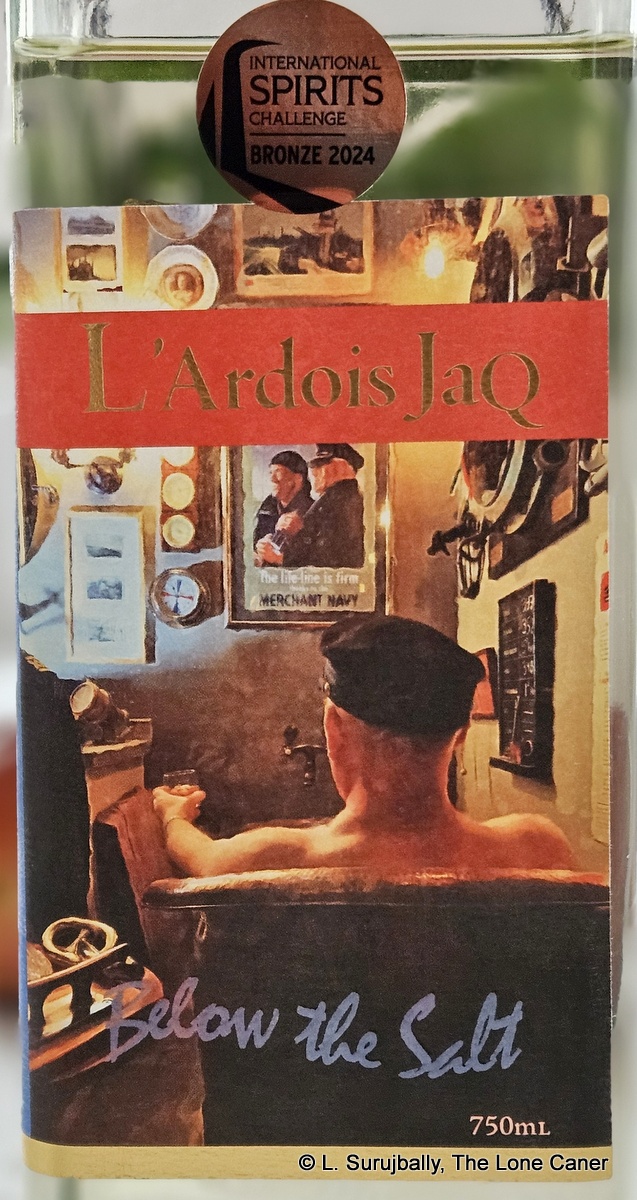
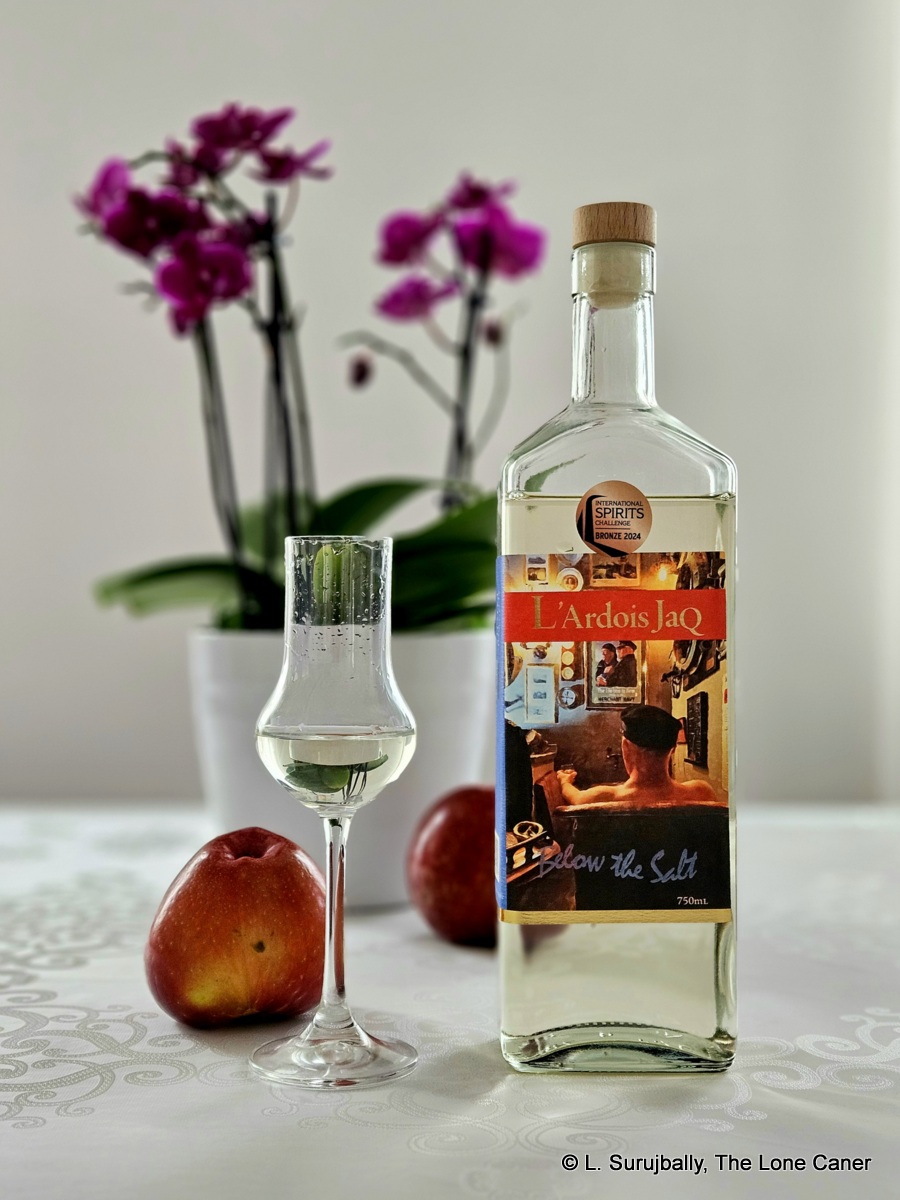
For those who trawl the Canadian rum scene and occasionally despair at ever finding a locally made hooch that would blow their hair back and wow their pants off, well, I have a new candidate for you: the very tasty, lightly (very lightly) aged, almost-white stinker of a rum called L’Ardois JaQ, made by a recently opened craft distillery in Nova Scotia run by (and I shit you not) a tug boat captain I met named Gregg Colp, whose business card very appropriately gives his position as “Chief Adept and Bottle Filler” and sort of gives you a flavour for the whole operation.

That preamble requires a lot of unpacking, so bear with me.

Distillery Background

Captain Colp – you gotta love the name – is indeed a tug boat captain for the Arctic sealift. He has been involved in making one form of alcoholic beverage or other, legal or not, commercial or otherwise, since he was a pilchard brewing illicit beer in his backyard. Having studied chemistry at Uni, he then got his master’s ticket and spent the next decades travelling around the Caribbean and other parts of the distilling world, which included interning in Cognac for a venerable maison there (no, not the one you’re thining of) just because it sounded like fun and he wanted to know more about the entire process. The man, you can tell, loved rum.

Anyway, some years ago, as cruel eld frosted his hair and bit at his bones (while simultaneously deflating parts he preferred to remain inflated) he decided he wanted a retirement plan, something to ward of the chill, make a few bucks and indulge his maritime proclivity for rum. After trawling around and consolidating his experience (to augment what he already had amassed in a lifetime of globetrotting, and that’s a lot) and sourcing a double retort pot still, he and his partner Vikki Piersig (her card reads “Chief Mate and gal who makes the distiller and most everything else look good” – people, I cannot make this stuff up!) set up shop as a small distillery in a landaway in Highway 4 in Nova Scotia (very close to the shore dividing it from Cape Breton where his office premises are). In point of fact, as a throwaway factoid, he was offered the opportunity to take over Vernon Walters blacksmith shop in the 1990’s (when he was sailing on the Bluenose itself), long before Ironworks came on the scene and took over the premises to launch Ironworks Distillery. Small world.

That irreverent sense of humour exemplified by the business cards is to some extent also represented by the name of the distillery – Below the Salt. While in today’s world salt is something of a commodity whose major use is a feedstock for industrial chemicals, for most of history it was a tradeable good much used for nutrition and preserving food; trade routes were opened to search for new supplies, and as late as 1860, wars could be fought over it. In medieval times it was a precious resource not often seen except on the tables of the rich, where  small pots of the stuff were placed halfway down a noble’s long dining table. The lords, ladies and exalted ones (which is to say, not us) sat “above the salt” as a mark of their lofty station, while us peasants, rabble, assorted commoners and lowlifes sat “below the salt” – and it’s clear where the Chief Adept’s preferences and antecedents lie.

Since Calgary is known for its maritime waterways, it was just a matter of time before Captain Colp sailed into my area with a blatting tantaraa of trumpets, all flags waving, and a fistful of bottles in each hand. And so we met and had a most enjoyable afternoon running through his line of rums, getting progressively more hammered by the minute, until it was all we could do not to break into sea chanteys and do a hornpipe right there in the bar (well…I exaggerate a little for effect because I can’t let a good story pass…but only a little) — and because I really liked this one a lot, I’m going to start with it to give an introduction to the company, the man and the rum

Rum Specs, Tasting Notes

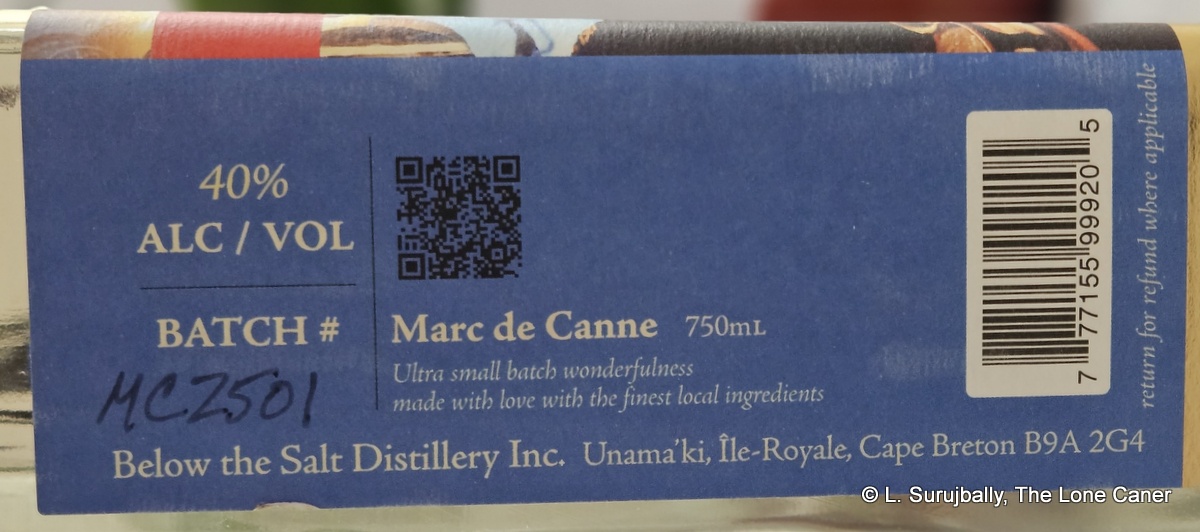
Basically this is a rum that is not quite an agricole-style, but close: cane honey in this case, or more specifically, unrefined Guatemalan and Demerara cane juice crystals (specifically not refined sugar) akin to jaggery or panela, re-liquefied, rendered down to honey, and then fermented for a few days. The distillate coming off the pot still is then aged – if the term could be used – in just about dead’r-than-a-doornail casks sourced in the Caribbean, with little to offer except maybe bad advice, for six to eight weeks: just long enough to impart a little colour, but not enough to appreciably alter the flavour profile that was (and is) desired. 

Cap’n Colp is a huge proponent of letting natural flavours pop out, and some edge be retained, without too much oak influence gumming up the works. One aspect of the process that comes in for mention here is that Gregg re-distils the lees in each run, for added flavour and bite and pungency, and it is this step that I believe elevates the rum beyond the puling milquetoast vodka wannabes that populate far too much of the barren wasteland of the Canadian rum shop shelves into something really original. 

“Wow!” I wrote in my initial evaluation when I smelled it – “This thing has real character!”  And it does. The nose starts out with the aroma of forests and sun-dappled jungle glades steaming after a warm tropical rain: loam, wet earth, brine, mud, waterlogged bark — and believe me, this is far from unpleasant, more like a deep mossy herbal scent that channels cane rum in a fascinatingly different way. And that’s just the start – the fruits make their entrance after a while: ripe green grapes, apples, tart peaches, overripe mangoes, attended by light florals and and sweet sugar water, plus (and I know this will turn some off) ashes and dusty cardboard.  I mean, the nose pretty much presses most of the buttons we would expect in an unaged or young agricole from the islands…except that this is made north of 49. 

The palate is also really good, notwithstanding the living room strength with which it comes out: it tastes initially of fresh hay drying in the sunshine after a rain, as well as of honey, sugar water, sweet corn, green peas from the can… odd I’ll grant you, but far from unpleasant. Original is not a bad word to describe it, yet completely rum-like. Moreover, after a while we also get white fruits, watermelons, brine, a few Moroccan red olives, a touch of ashes and cardboard again, and just enough lemon zest to make a point without overwhelming everything. It all leads to a subtly powerful finish that sums up all of the above, without adding anything to the party – light fruits, some sour and tart notes, laban, yogurt, ashes, lemon zest and a nice filip of delicate florals. 

Summing Up

Like I said, it’s a lot, and I think that as a sipping rum,it’s really nice, even if the company website suggests it’s something of a mixer’s ingredient (good for a “caipirinha, pisco sour, mojito, and even some traditionally tequila based drinks” says the website). It has that versatility of purpose that I think makes for a good rum that tyros can cut their teeth on, without alienating more experienced drinkers.  It works, in short, on many levels at once.

Lest you believe this was the romanticized ravings of an over the hill reviewer who imbibed too much, and got far too high on his friend’s supply, I invite you, should you come across a bottle, to give it a try. It reminds me of some lof the experiments I tried from those new UK distilleries a year or two back – it shares much of the same sense of untamed wild madness, the desire to go where the process led and to hell with tradition. It’s a sort of analogue to writing, I think – you write what you yourself want to read and head in the direction where that leads you. 

Here, Gregg Colp has experimented, added eye of newt and tail of toad into his cauldron, stirred, added some spider’s webs and his own personal brand of magic – and  come up with a rum that he himself wanted to drink. And man, does it ever work, on many levels. I’m going to go right out there and buy pretty much everything else the guy makes, I’m that impressed with it. I hope you can try it yourself one day, and see if you agree.

(#1122)(86/100) ⭐⭐⭐⭐


Other notes

  • Video recap link of the review
  • Video recap of the distillery background
  • There’s a non-rum-related story behind the photograph and the name of the rum, but the website covers enough of that and this review is already too long. It channels a typically Maritime sense of humour, tall tales of the Paul Bunyan and Pecos Bill stripe, plus a play on words that any punster would enjoy.  I’ll leave you to check it out.
  • The outturn is unknown.  A few thousand bottles per batch, I think.
  • The company is available on social media (FB, IG, YT) and their website is here.