Jan 112013


All round excellent younger agricole from the House of Fabio Rossi.

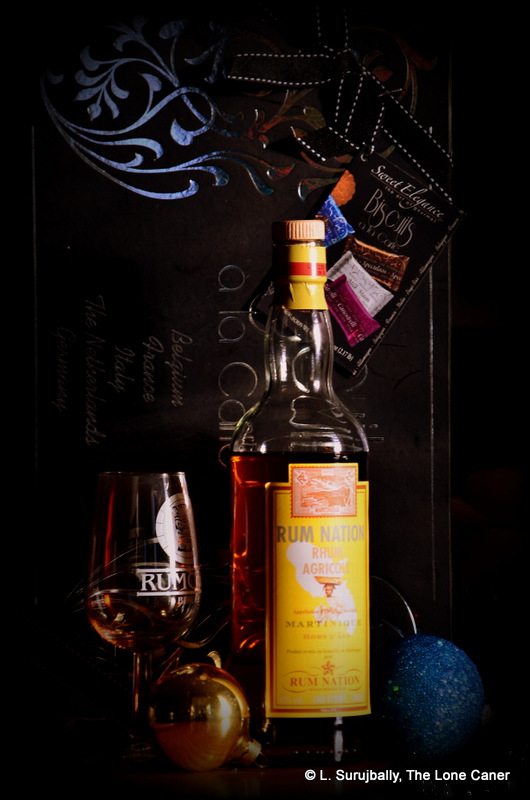
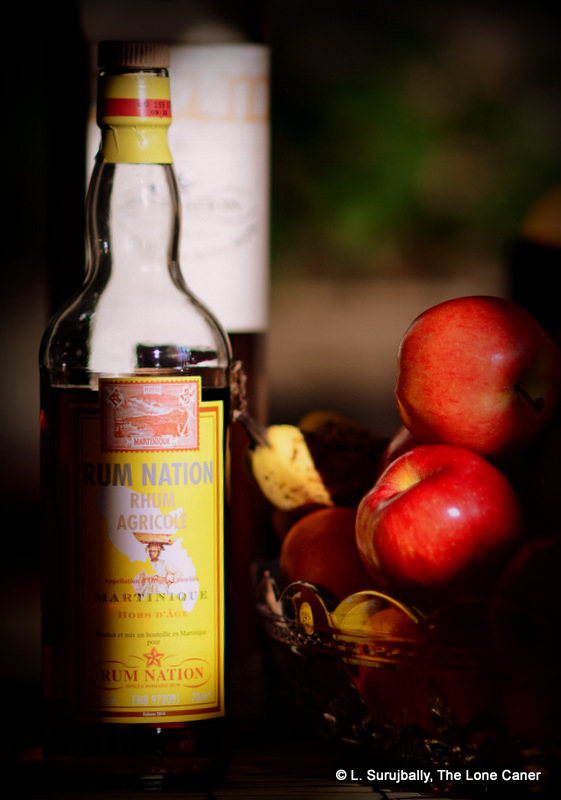
Rum Nation’s agricole rum from Martinique, the Hors D’age, is not quite as sublime as the other products of the company about which I have so enthusiastically written, but this should not dissuade anyone who enjoys the French island rums from trying it, since the overall quality is quietly impressive. I tasted this in conjunction with the Karukera Millesime 15 year old which I knew was a damned good rum, and if the RN didn’t quite come up to snuff with respect to its more aged competitor, it careened across the finish line a very close second…quite something, for a rum that’s not half as old (hors d’age is an appellation which means ageing is between 3-6 years, and this rum adhered to all the AOC guidelines to be termed a rhum agricole from Martinique).

There is a presentational ethic which is almost spartan about the less expensive RN offerings; this one was a standard barroom bottle ensconced in a cheap windowed cardboard box that showed the label through the plastic. The cork was cork (plastic tipped), the label was simple and with minimal information, and overall, for its price of about $60, I wasn’t expecting more.  Essentially, this has the look of a rum you can lose in a bar, which is pretty good since ostentation at this level is looked down upon…bad form you know, old man.

As with all RN’s products I’ve had so far, it’s a cut above the merely pedestrian. It decanted into my glass in an amber gurgle of deep evening sunlight, and gave off intriguing wafts of solid fruity tones even before I started really assessing the nose: strawberries, orange marmalade, and a teasing hint of licorice. Was that coffee grounds in the background? Sure hoped it was. And there was a faint wine hint, as vaporous as the Cheshire Cat’s grin, lurking in the shade there someplace (and here I’d like to point out that this was worlds removed from the overwhelming wine hammer of Thor with which Downslope Distilling’s six month aged rum battered me).
The Hors D’Age is a welterweight among rums…medium to light but remarkably solid body, providing a hefty heated punch, as if to prove that the 43% ABV wasn’t ever really gonna love me. For a nose that had been softly redolent of my father-in-law’s orchard, I was quite surprised at the briny driness of this offering. Surprise over, after it condescended to open up, it mellowed into a deeper cane spirit, releasing a pretty intriguing melange of coffee, peaches…and the savage sweet taste of burnt sugar cane peeled with your teeth and then sucked dry (ask any Guyanese what that’s all about). The subtle wine taste persisted, just not enough to be annoying or intrusive, and at the last, I was pleased to note a sort of segue into buttery, non-sweet white chocolate. Like I said…intriguing rum. As for the finish, it was long, warm and sere, closing up shop with the sharper accents of a cafe latte, almonds, and a clear herbal spirit fade that was characteristic of almost every agricole I’ve ever tasted.

Let me confess that while I like agricoles and appreciate – nay, respect – well made ones, overall they will never be rums I love with great, overwhelming, operatic passion. However complex, the profile is usually a shade too thin, too hard, too clear for my personal tastes — like a snooty French waiter who truly despises my lack of couth. As it was, this Hors D’Age ran a very close second to the Karukera (while the 12 year old Rum Nation Martinique Anniversary and the Clemente XO were better than both). I ran back and forth among my agricoles, and finally came to the conclusion that it was the longer ageing of the Karukera (15 years), and a better, smoother, tastier finish  that spelled the difference.

But you know, that’s all semantics. If you receive the rum on its own frequency, it’s as good as a moveable feast, really; yes, of course it could have been older, smoother, better – though at that point it would not have been this rum, or even (perhaps) a better one.  For the money, it’s a good deal, a good rum, plain and simple. And I have to be honest too – if RN can produce an agricole this good in less than six years, it seems churlish of me to degrade a rum that many others couldn’t have made at all.

(#140. 84/100)


Other notes

Mar 242012
 

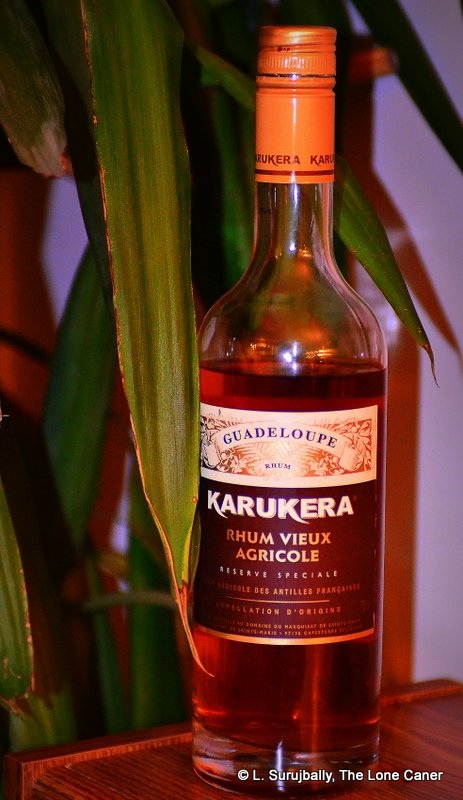
A generally unimpressive agricole aged five years, better as a mixer than a sipping rum.  I imagine its older brothers will be better (if I can ever lay my hands on one).

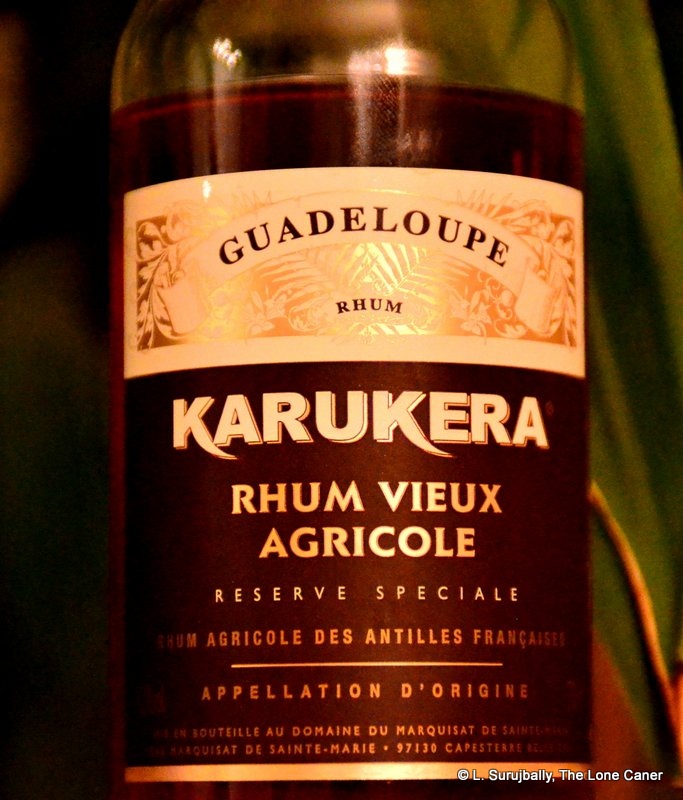
Karukera strikes me, from the dearth of any kind of hard information on it (even on its own website), as a boutique wannabe rum, something made on an relatively limited basis by an outfit seeking to build a more international sales on the back of its appeal to connoisseurs appreciating its limited production (and based on the unique characteristics of the terroire). This should, however, not dissuade you from giving this gold-coloured, light-bodied agricole a try if you come across it on a dusty shelf someplace (however, note that I am not giving it an unqualified pass.)

The French Caribbean islands – Guadeloupe in this case – are noted for their agricoles, which are rums made (in some cases to exacting specifications) from sugar cane juice as opposed to molasses. This gives them, in general, a lighter taste profile, a lighter colour, and a lighter overall mouthfeel. Overall, I have not been entirely won over by them (yet), preferring as I do heavier bodied, darker and more intense rums. There are, naturally, some exceptions, like the Rhum Clemente Tres Vieux XO from Martinique (upon which, after some back and forth tastings I finally came out positive).

This Karukera Special Reserve is a relatively young agricole rum, being aged for five years in small (no further definition is provided) ex-bourbon casks. Its youth is somewhat evident on the nose which is spicy, and has the light floral and grassy hints that so characterize French terroires. Sweet, with some oakiness, cinnamon and faint sulphury notes.

The 42% strength comes out quite robustly on arrival – even that extra 2% makes quite a difference on the palate; unfortunately this presented to me not as an intensity of flavours I so like about overproofs, but more as a sort of harsh initial sting on the tongue. Yes it was redolent of cloves, pepper and gradually something softer (bananas) and maybe liquorice, must be honest about that. It was also a shade dry. No caramel, burnt sugar or molasses aftertastes until the glass dried out the dregs, so no surprises there at all. Not sure I want to wait that long to get the taste I’m after, though. Finish is short and unappealing to me personally. Overall, I must confess to being…well, uninspired.

And yet, and yet…it’s not really that bad after it opens up a shade. I marked it down for the finish, sure, but before that the taste ended up strong and somewhat simpler than I had initially sensed, and I must remark on this before you throw the whole thing down the drain.

All right, so this rum, like most agricoles, doesn’t turn my crank all that much. It’s a young low-to-middle-range rum, not that good a sipper. Indeed, most notes online remark on its excellence as an ingredient in cocktails and tiki drinks, on which I am by no means an expert. I review things on an individual basis as sipping drinks with only occasional nods to the miscibility of the product. On that basis, I would suggest it’s actually not too bad. The cocktail ingredients fill out the lack of the rum quite well.

What irritates me about rums like this is how little information there is that is available for research on the product. All I can tell you beyond what I’ve written above is that it originates in the domaine of Marquisat de Sainte Marie, and made by the oldest distillery in Guadeloupe, the Esperance distillery established in 1895. And that’s it. For a guy like me, who likes providing more rather than less information beyond mere tasting notes, this ain’t much.

Having grumbled my way through the bottom of my glass, let me sum up. It’s a herbal, grassy, slightly spiced drink of some sharpness. I don’t recommend taking it neat, or even on ice. It’s too strong to be ignored, and too light for me to take it really seriously. In short a light, relatively complex mid-ranging cocktail ingredient. And not really for me.

(#105. 75/100)

Feb 092011
 

First posted 9th February, 2011 on Liquorature

This is a weaker than usual, unloved product of a distillery that has better products up the food chain, but apparently refused to pay the same attention to this one.  It passes muster as a rum, but barely, and if you have choices and like stronger wares, this one won’t get you to part with your cash. If you want something stronger than a port or liqueur, but weaker than a real spirit, well,  I guess this is for you.

Right out of the bottle you get a sense of the relative weakness of this rum.  Perhaps it’s a measure of the forty percenters or even fifty percenters I’ve been sipping lately, but let’s face facts and concede that it’s also a relatively weak rum at a 37.5%, one which would make any maker of a 151 snicker a little. And that also makes the Ron Barceló weigh in dangerously close to being a liqueur, which this site is not in the business (yet) to review.

Ron Barceló, made in the Dominican Republic (not in Dominica – the two are separate nations), is a product of Barceló Export Import, which has been in business since 1930, has always been a rum producer, and remains to this day a privately held company run by men who bear the name still.  Julian Barceló, the founder, hailed from Spain – the name is actually Catalan –  and arrived in the DR in 1929.  His company soon became a very large and profitable enterprise, expanding his line of products to differing rums starting in 1935. By the 1980s the company became one of the biggest in the country, and expanded its market base by aggressively promoting exports – Spain was and continues to be a prime export market for the rums, of which the anejo reviewed here seems to be somewhat of a mid tier product.  Maybe it’s a sherry thing. Note that this is one of the “Three B’s” – Bermudez, Brugal and Barceló – of the DR, and the youngest.

A golden coloured rum, Barceló poured into the glass and displayed the swiftly moving anorexic legs of a middle distance sprinter, judging from the haste with which the scooted back down into the body. The nose was quietly unimpressive: it had a bit of sting and spice to back up the scents of caramel, burnt sugar, bananas and perhaps a bit of coffee, but beyond that, there was very little, even after I went back to it a few minutes later, and again for a second and third nosing. I really didn’t know what to make of it: against the lack of depth and power imparted by a lower alcohol content is a slightly smoother, less astringent nose imparted by that very same lack. Bit of a schizo product, really.

The downward spiral continued on the palate: thin, a little harsh (if I was unkind I’d say bitchy, but that would be implying a strength the rum does not possess). The flavours are unassertive, though one must concede that you do get unambiguous notes of caramel, molasses and brown sugar, and perhaps a shade of citrus.  But none really “tek front” and either elbowed the others aside, or asserted a pleasing marriage of the lot.  You got these, and…nothing.  You could almost say it was boring.  And the finish?  Well, uninspiring – smooth and short, with no sting worthy of the name (let alone a burn) and some kind apologetic whiff of weak spirit at the back of the throat, a tired reminder that Barcelo had some alcohol content after all. Undistinguished and unremarkable, to me.  The whole product smacks of some kind of “good enough” philosophy in its provenance that I find vaguely affronting.

In sum, I’m completely unimpressed.  With respect to other distillers’ products from the same half of the island, I didn’t care for the Bermudez Ron Añejo Anniversario, to which I gave an indifferent opinion, but that one, at 40%, was marginally better than this anemic offering. The Brugal on the other hand blew both of the other “Three B’s” away on better body, better taste and a phenomenal finish.  Mind you, as I noted in the former review, people who like cognacs and whiskies and drier libations might find lots to favour about the Barceló – I merely suspect that it’s lower proof will alienate those same people.  Who wants an underproof when there’s so much standard 40% or higher out there for the same cost, with a bolder, more assertive profile? I mean, the only reason I don’t classify this as a liqueur right away is because it is not sweet or heavy enough.  But it’s close. No wonder the maker’s website gives so little information on the Barcelo: there’s precious little information to give.

So there we have it.  The indifference of manufacture, coupled with an underproofing of the Barcelo, undoes what could be termed passable work by the blenders — and therefore I must conclude that it appears that it is a throwaway product, something without much care and love lavished upon it.  It’s an also-ran for older, more aged, better blended efforts from the same company.  It tries to walk with the big dogs, but for my money, alas, it just ends up peeing like a puppy.

(#066. 61/100)

Other notes

  • In September 2022 a comment (below) pointed out that Barcelo makes rums only from cane juice, which an immediate check on the website of the company also confirms. I have therefore changed some of the factual elements of this review appropriately (although score and tasting notes stay as they were).  No idea how that slipped past my original vetting process…however, it’s possible that they used both molasses and cane juice, since Latin countries / ex-Spanish colonies did not have a history or tradition of using cane juice.
  • Note that in 2009 a new Barcelo division, Alcoholes Finos Dominicanos, was established with funds from the EU Rum Sector Programme (the same one that funded Clarendon’s new column still / fermenters and Foursuare’s bottling plant), and built a new industrial distillery the following year, which is processing 100% cane juice. This is now the distillery Barcelo is using to make its rums.  It seems reasonable to suppose that this Anejo I tasted in 2011 is from older stocks that were made from molasses.  The taste supports that assumption. (See also this 2020 Barcelo company profile on YouTube).
Jun 192010


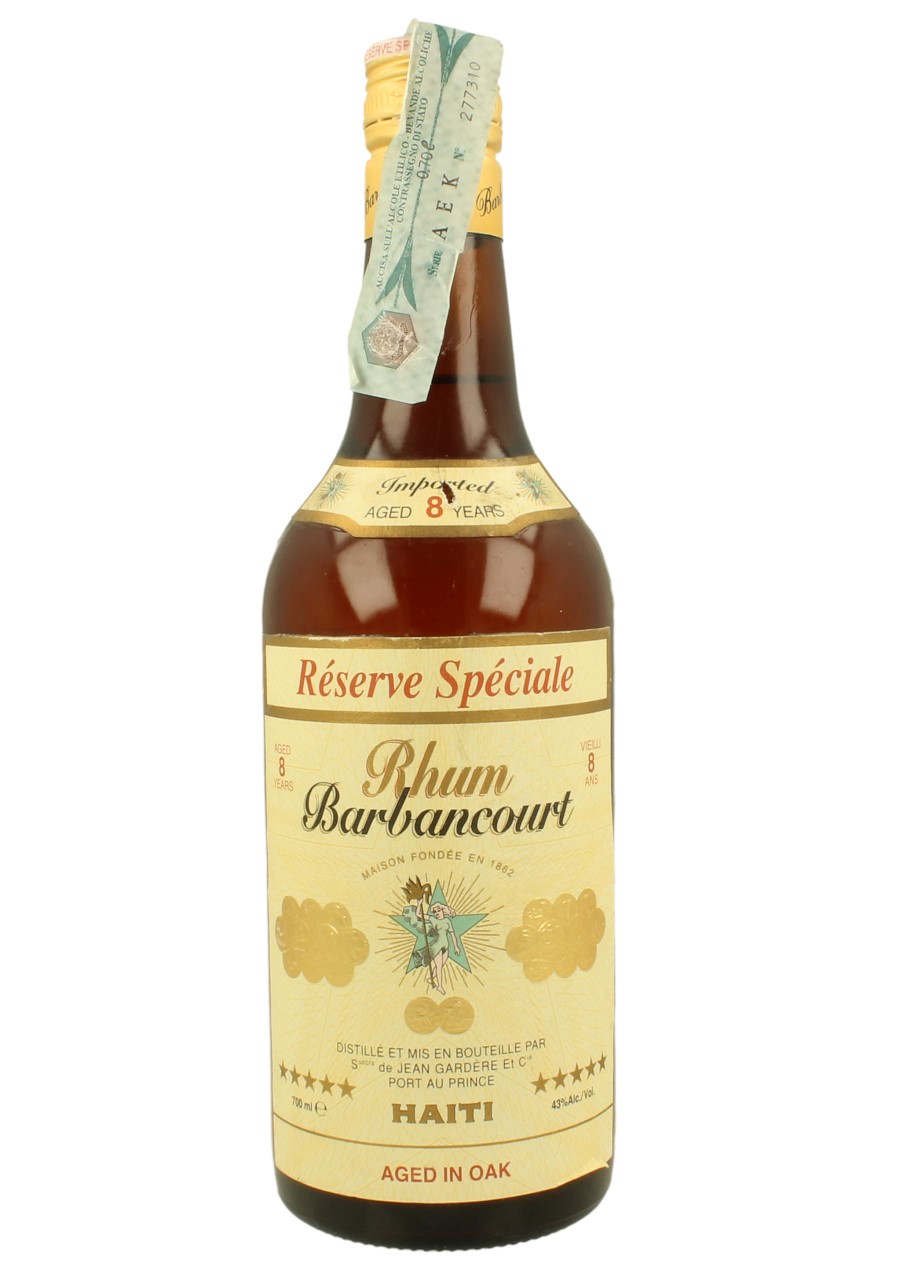
Photo (c) Whisky Antique

First posted 19 June 2010 on Liquorature.

Barbancourt.  Just roll that on your tongue and you can almost hear the whisper of words both foreign and exotic – Barbarossa the Ottoman privateer; the Barbary Coast; Hispaniola; bucaneer…the name reeks deliciously of of piracy.  And aside from peg legs, parrots, cutlasses, the Spanish Main and caravels of looted or buried treasure, is there any product more identified with the term than that of their most famous drink?

I have to admit that it was the romance of the name and origin – and some honest curiosity –  that made me pick this one.  Haitian rums are not made from molasses but rather directly from cane juice, and the sojourns of the Club have not made it to this island nation yet; nor have I seen that many examples of the brand here in Calgary. Like other French islands (Martinique for one), what we have here is a rhum agricole, and I was fascinated as to the difference in the end product. There are more expensive examples from Barbancourt out there (the 15-year estate offering for a start), but this seemed like a reasonable compromise.

Agricole rhums are lighter-coloured than the average, as a result of being made from cane juice as I noted above, and tend towards dark yellow. This Special Reserve originated from a double pot-still distillation, and was then aged for eight years in Limousin white-oak barrels imported from France (they once held cognac, I believe). Press releases and distributor’s notes suggest Barbancourt is among the most widely distributed and available rums from the Caribbean, but I chose to dispute that: the Law of Mediocrity (which is not what you think it means) suggests that if, in  the first store you enter in some average spot on the globe, they stock this stuff, then you’re likely to find it anywhere.  Since I’ve spotted this rum once in many years (last week)…well, you get the point. I’ll grant you however, that it’s probably one of the better known Haitian exports.

I liked the light colour (hidden from casual view by a darkened bottle of no distinguishing presentation) and a swirl in the glass revealed shy legs that took their own time draining back into the glass.  The nose surprised me because the spirit surged to the fore immediately: it was, quite honestly, a bit overwhelming, even medicinal.  But as that faded, I managed to pick out notes of butterscotch, toffee, brown sugar and…honey. Nice.

The taste was tricky because the more powerful components took charge so quickly.  You have no problems picking up vanilla, the toffee, caramel and burnt sugar, but subtler flavours hide behind the skirts of the more aggressive ones – a bit of nuttiness flirted around with a faint citrus I could not identify (I always have a problem figuring out whether it’s lime, lemon, orange, tangerine or some other Vitamin C bearer I’m tasting). The burn on the backstretch is not strong, but definitely present, a phenomenon I attribute to the prescence of oak in the maturation process. I wish there had been less spirit sting, to be honest, because it marred what to me had been a spiffing job up to that stage.  But really, it’s a minor point, because overall, I thought it was a decent sipper: not top of the line, but a very pleasant sundowner.

The body of the rhum is not as rich as I might like, and in taste it hints at the heritage of Dupre Barbancourt who hailed from the cognac producing region of France and formed the company in 1862.  So it’s perhaps a bit schizophrenic in that it’s a medium- to light-bodied paler rum, slightly dry, and not as sweet as might be expected – hardly the profile of a rum as I’ve been used to defining the term: more like a cognac, really. And here, my plebian instincts overwhelm my own snootiness, because with that kind of flavour and texture, the spaces of the drink are very nicely filled by a coke, and in doing that, a masterful little mixed drink is created which I have no hesitation whatsoever in recommending to any who ask.

(#025)(Unscored)


Other Notes

  • As a point of interest: Haiti is unique as a nation because it is where the only successful slave revolt in the West Indies took place, under Toussaint L’Ouverture, at the turn of the 18th century. Sadly, it is now the poorest nation in the western hemisphere: two centuries of western ostracism and successive dictatorships have left the place in shambles. High marks go to the businesses that manage to produce this excellent product…one can only speculate under what conditions they do so, or with what methods.
  • In January 2019 I revisited the Barbancourt 8 after having tried quite a few more from the company, and named it a Key Rum of the World.
  • Between 2010 and this update in 2021, the label design has changed once or twice, but so far as I am aware the blend has remained close to the same.